Longacres Finance
What Is a Good ROIC? Industry Benchmarks for Long-Term Investors
Return on Invested Capital (ROIC) is a key measure of business quality, but “good” levels vary by industry. This guide explains ROIC benchmarks, highlights high-quality companies, and shows how Yieldr uses ROIC within its sector-adjusted Quality Score framework.
Return on Invested Capital (ROIC) is one of the most powerful metrics investors can use to evaluate a company's quality.
At its core, ROIC measures how efficiently a company turns capital into profits. Businesses that consistently generate high returns on invested capital tend to have strong competitive advantages, superior management teams, and greater potential to compound shareholder wealth over long periods of time.
While many investors look for a ROIC above 10%, there is no universal benchmark that applies to every industry. Some sectors naturally generate higher returns than others, making industry comparisons essential.
In this article, we'll examine what constitutes a good ROIC across several industries where the metric is particularly meaningful and provide examples of companies that have historically excelled at generating returns on capital.
What Is ROIC?
ROIC measures how effectively a company generates operating profits from the capital invested in the business.
The formula is:
ROIC = NOPAT ÷ Invested Capital
Where:
- NOPAT = Net Operating Profit After Tax
- Invested Capital = Debt + Equity - Excess Cash
In simple terms, ROIC tells investors how many dollars of profit a company generates for every dollar invested in its operations.
A company earning a 20% ROIC generates $0.20 of operating profit annually for every dollar invested in the business.
Why ROIC Matters
High ROIC businesses possess an important advantage.
They can reinvest profits at attractive rates of return, allowing earnings, cash flow, and intrinsic value to compound faster over time.
For example:
- A company earning a 5% ROIC must invest $20 to generate an additional dollar of profit.
- A company earning a 20% ROIC needs only $5 to generate that same dollar.
Over decades, this difference can have a massive impact on shareholder returns.
One of the reasons ROIC plays such an important role in Yieldr's Quality Score is that it captures a company's ability to create value from the capital entrusted to management.
However, ROIC should never be evaluated in isolation or against a single universal benchmark. Different industries operate under different economic realities. A software company can often generate far higher returns on capital than an industrial manufacturer, while comparing either to a utility or bank would be largely meaningless.
For this reason, Yieldr's Quality Score uses industry and sector-specific scoring thresholds when evaluating ROIC. Companies are measured against relevant peers rather than a one-size-fits-all standard, providing a more accurate assessment of business quality.
Consumer Staples
Good ROIC: 10% to 20%
Excellent ROIC: 20%+
Consumer staples companies often benefit from strong brands, recurring demand, and pricing power.
The best operators can maintain high returns on capital for decades.
Examples:
- Phillip Morris International
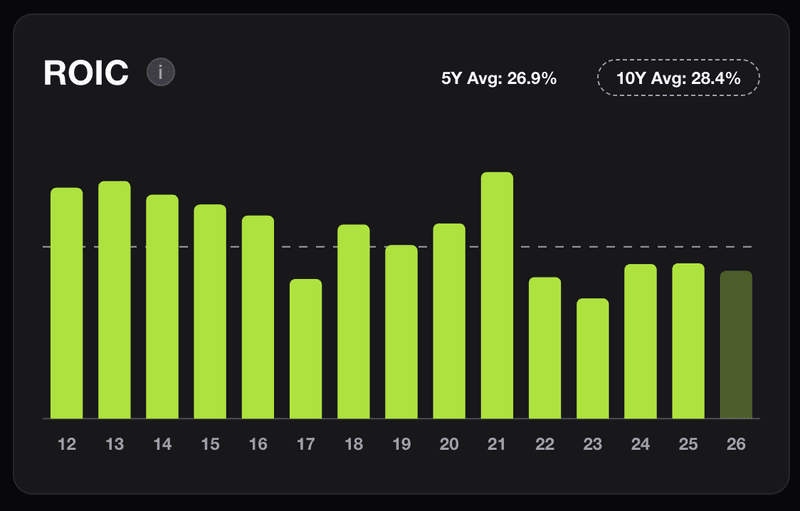
- Colgate-Palmolive
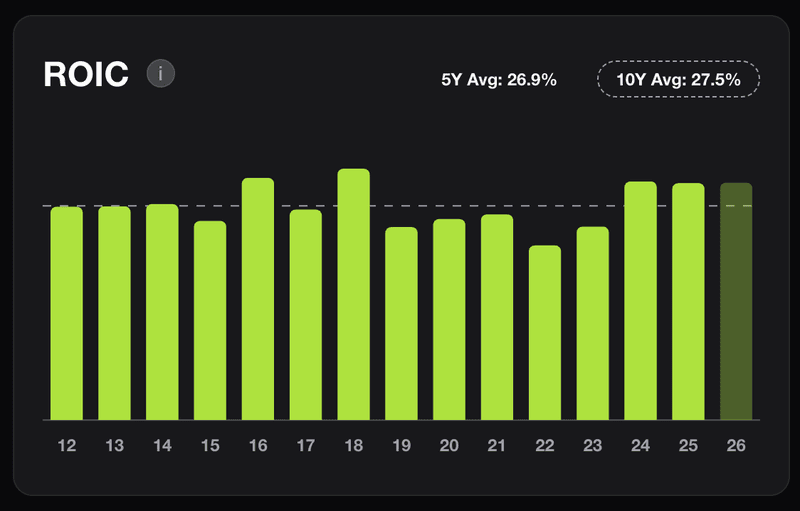
These companies own globally recognized brands that require relatively little incremental capital to grow.
Healthcare and Medical Devices
Good ROIC: 12% to 20%
Excellent ROIC: 20%+
Healthcare companies often benefit from intellectual property, regulatory barriers, and strong customer relationships.
Medical device manufacturers are particularly attractive because they can generate recurring revenue while requiring modest capital investment.
Examples:
- Stryker
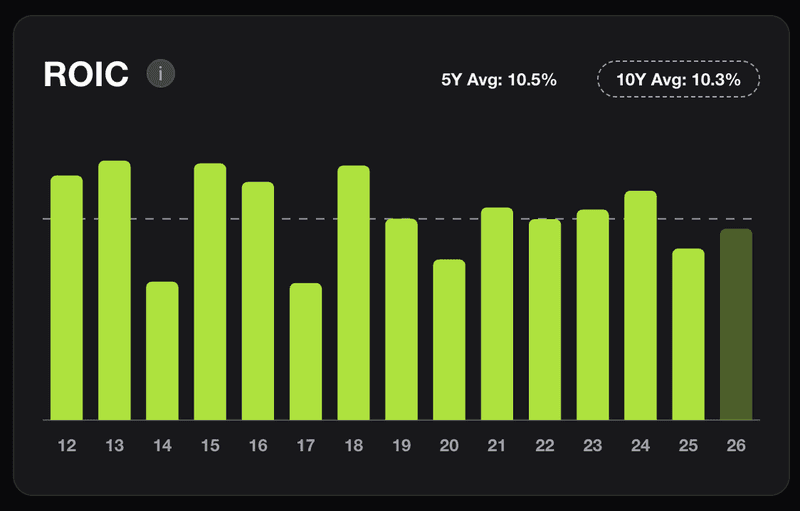
- Zoetis
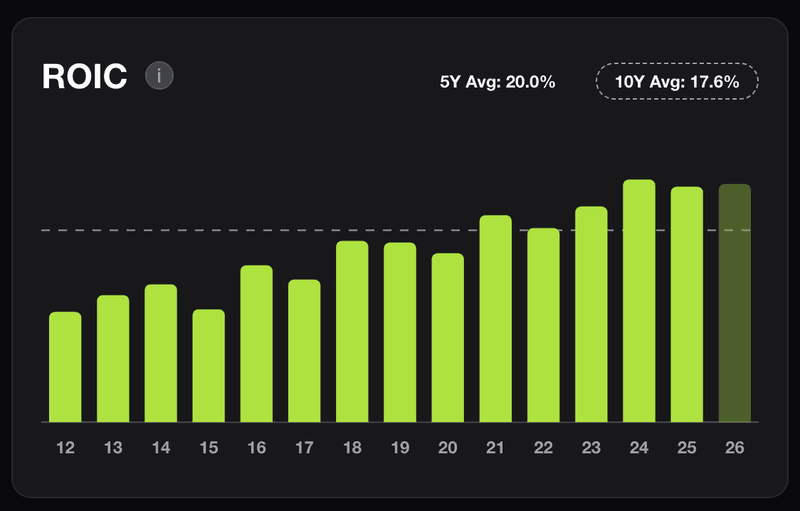
Many leading healthcare companies consistently produce ROIC figures well above the broader market.
Software
Good ROIC: 15% to 25%
Excellent ROIC: 25%+
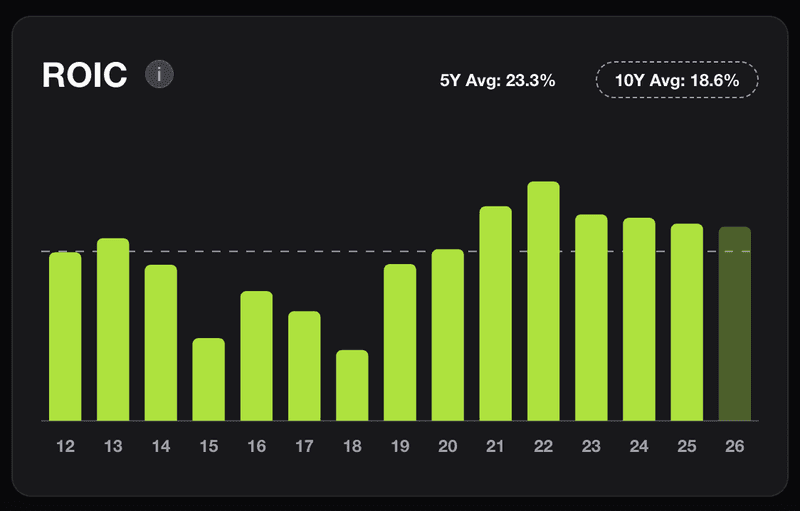
Software businesses frequently generate some of the highest ROIC figures in the market.
Once a software platform has been developed, each additional customer can often be served at minimal incremental cost.
Examples:
- Microsoft
- Paychex
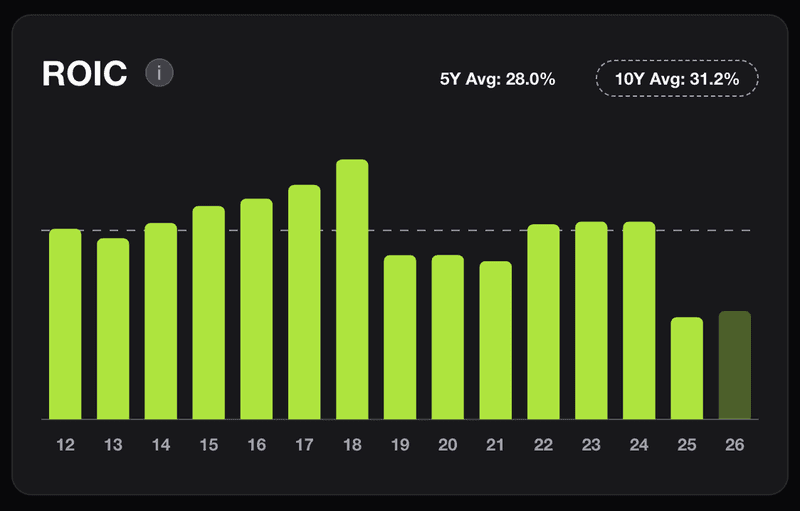
Strong recurring revenue and high switching costs can allow software companies to compound capital at exceptional rates.
Payment Networks
Good ROIC: 20% to 35%
Excellent ROIC: 35%+
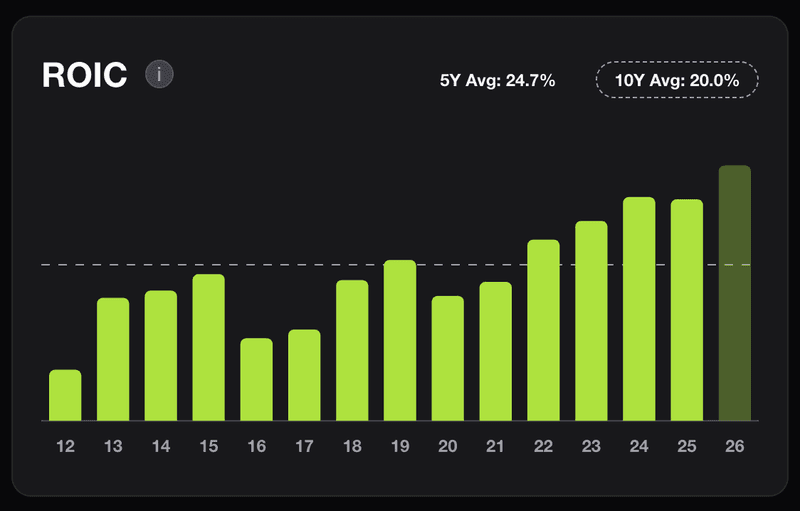
Payment networks possess some of the strongest economic moats in the world.
They benefit from network effects, global scale, and limited capital requirements.
Examples:
- Visa
- Mastercard
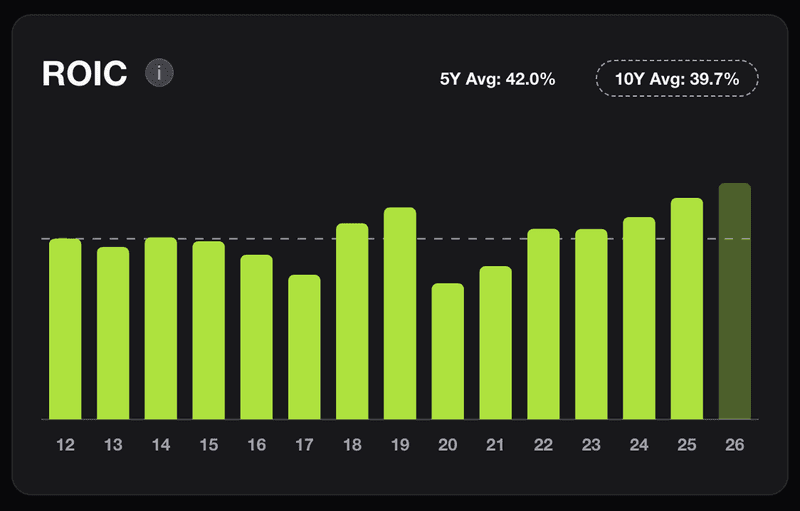
These businesses routinely generate some of the highest returns on capital found in public markets.
Industrials
Good ROIC: 10% to 15%
Excellent ROIC: 15%+
Industrial companies typically require more capital than software or payment businesses, making ROIC an especially useful screening metric.
Examples:
- Graco
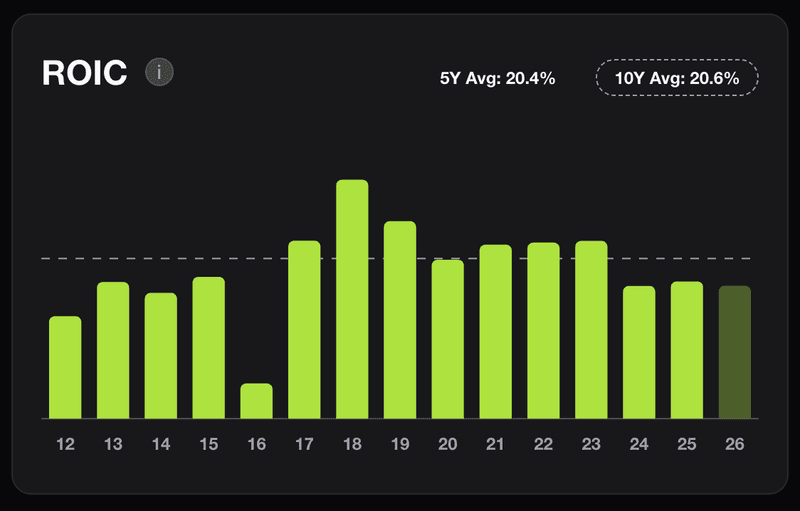
- Lockheed Martin
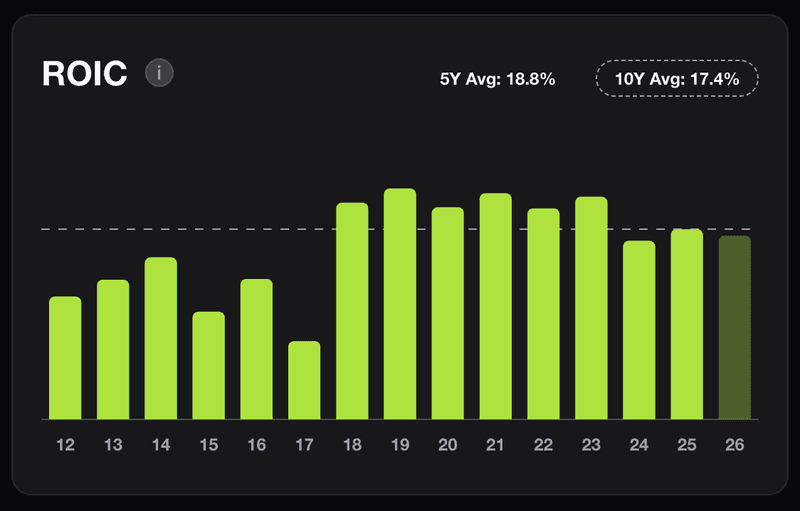
Companies capable of maintaining elevated ROIC despite capital-intensive operations often possess durable competitive advantages.
Information Services and Data Providers
Good ROIC: 15% to 25%
Excellent ROIC: 25%+
Information providers benefit from recurring subscriptions, proprietary data, and high customer retention.
Examples:
- MSCI
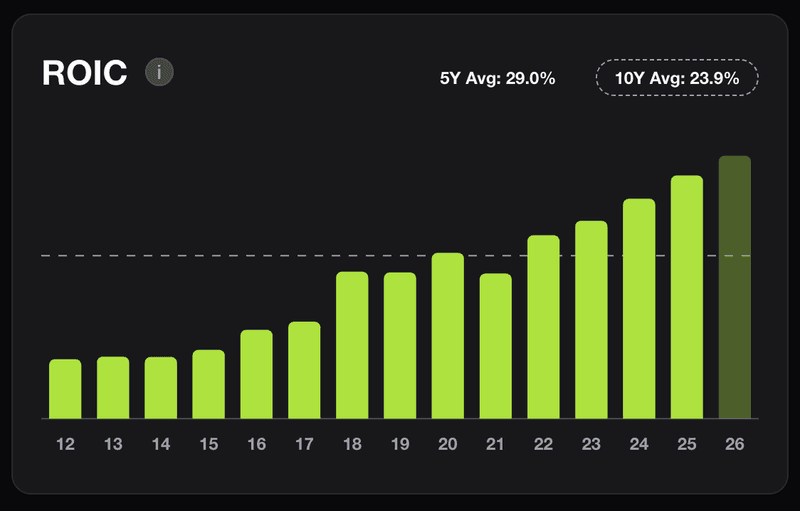
- RELX
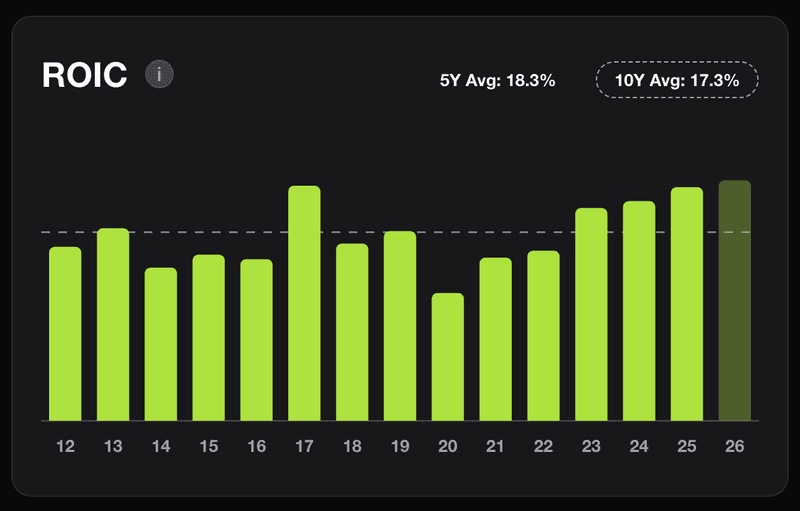
These businesses frequently generate attractive returns due to their asset-light business models.
Business Services
Good ROIC: 10% to 20%
Excellent ROIC: 20%+
Many business service companies enjoy recurring customer relationships and scalable operations.
Examples:
- Automatic Data Processing
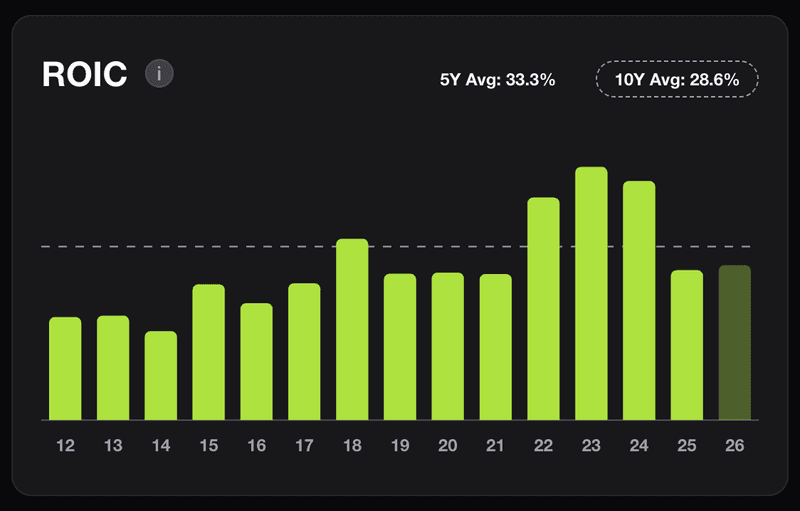
- Cintas
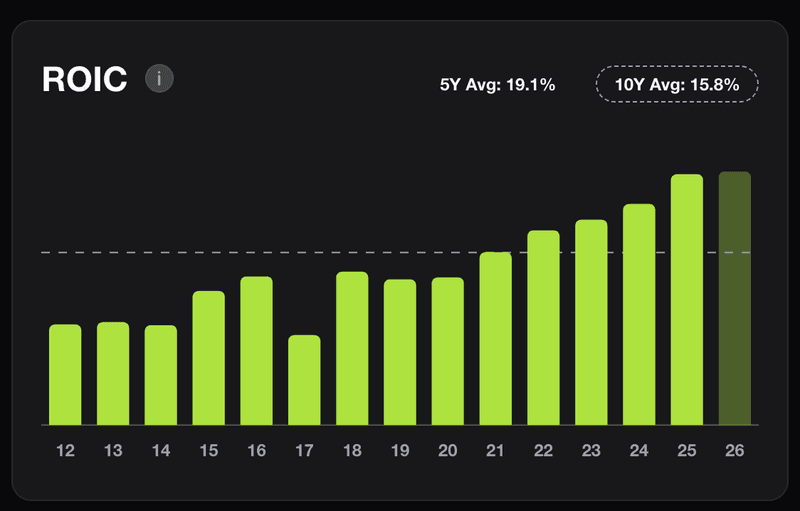
Strong customer retention can allow these companies to steadily reinvest capital at attractive rates.
Aerospace and Defense
Good ROIC: 8% to 15%
Excellent ROIC: 15%+
While aerospace and defense businesses require significant expertise and investment, long-term government contracts and high barriers to entry can support strong returns on capital.
Examples:
- Northrop Grumman
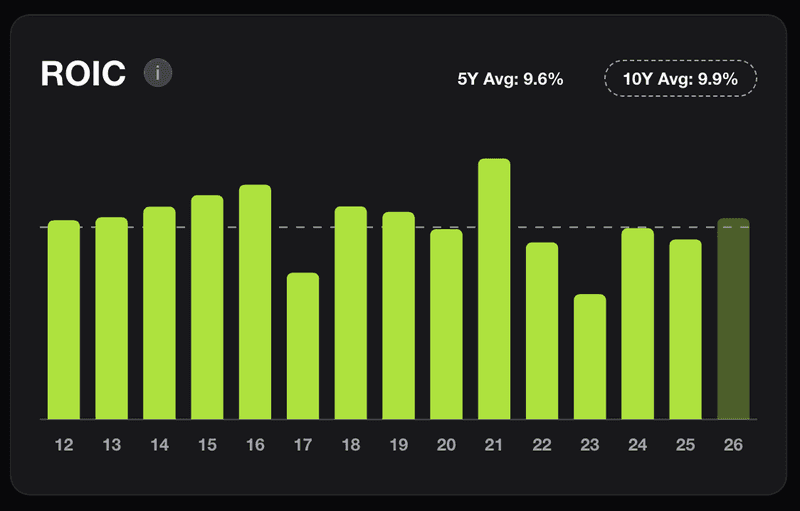
- HEICO
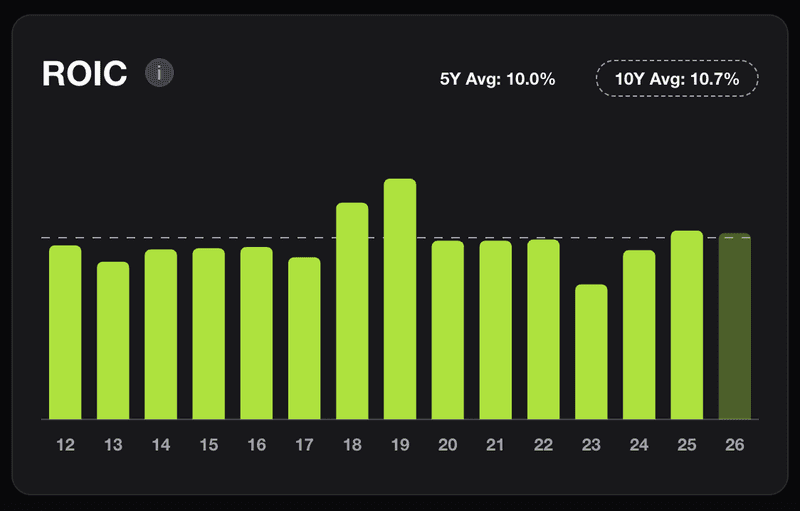
The best operators combine niche market positions with pricing power and high switching costs.
Industries Where ROIC Is Less Useful
ROIC is not equally valuable across all sectors.
Investors should be cautious when applying ROIC to:
- Banks
- Insurance Companies
- REITs
- Utilities
In these industries, regulatory requirements, leverage structures, and unique balance sheet characteristics often make metrics such as ROE, ROA, Combined Ratio, Funds From Operations (FFO), or Net Interest Margin more informative.
Final Thoughts
There is no single ROIC threshold that defines a great business.
A 12% ROIC may be exceptional for one industry and merely average for another.
As a general rule:
- Below 8%: Weak
- 8% to 12%: Acceptable
- 12% to 20%: Strong
- Above 20%: Exceptional
The most successful long-term investments are often companies that can sustain high ROIC for many years while continuing to reinvest capital at similarly attractive rates.
Rather than comparing every company against the market as a whole, investors should evaluate ROIC relative to industry peers and focus on businesses that consistently rank among the best in their respective industries.
This industry-specific approach is also reflected in Yieldr's Quality Score methodology. Companies are evaluated against peers operating in similar business environments, helping investors avoid unfair comparisons between fundamentally different industries.
Context matters, and understanding industry benchmarks is essential when using ROIC as a tool for stock selection.